


Reflux formulas: an honest guide for parents on thickened milk

Anti-reflux formulas are widely recommended and heavily marketed, making companies billions every year despite the facts that science tells us. Facts that every parent of a refluxy baby deserves to understand...
Your baby's screaming and bringing milk. You are probably googling furiously and believe you've found the answer - Anti-Reflux Formula. So you continue your search and find brands like Aptamil AR, Cow & Gate Anti-Reflux, HiPP Anti-Reflux, and Enfamil AR are widely prescribed for other newborns. In fact, millions of parents reach for them every year — and they're doing so on every continent.
However, there is a significant gap between what these formulas promise and what the clinical evidence actually supports. Understanding that gap — how these products are engineered, what they do inside your baby's body, and what rigorous research says about their real effectiveness — is of course essential to making an informed choice.
What infant reflux actually is…
So, first let’s clarify. Genuine gastro-oesophageal reflux disease (GERD or GORD) — where reflux causes real harm, poor weight gain, serious oesophageal damage and respiratory complications — is considerably less common and does warrant medical intervention. This is not what we are talking about here. This article is about gastro-oesophageal reflux (GER or GOR) which I heal naturally in my clinic, without anti-reflux formulas or milk thickeners.
Most parents are taught that the majority of refluxing happens because of acid moving up the oesophagus. That babies are born with an immature digestive system, and this has the sphincter muscle at the bottom of the oesophagus allowing acid to travel upward and burn the oesophagus and the unsettled behaviour is about the burning of the acid. However, this is not the truth...
Yes, acid from the stomach can travel up the oesophagus when a baby refluxes, but this occurs because the sphincter muscle is being pressured to open from what I have discovered is Digestive Overload (the real cause of reflux and silent reflux which can be healed naturally). Two main contenders that cause this pressure is excess air in the stomach, which the majority of our newborns have, and being overfed - also a common scenario these days with the feeding advice that does not biologically align to their digestive function.
But with the highly marketed projection that a baby is born with an immature sphincter muscle, therefore there is nothing you can do to help them until they "grow out of it", Anti-Reflux Formula, and milk thickeners products like Carobel, has become a first response by some healthcare providers, whom share the implicit promise that thickening the feed will stop acid travelling upward and causing harm.
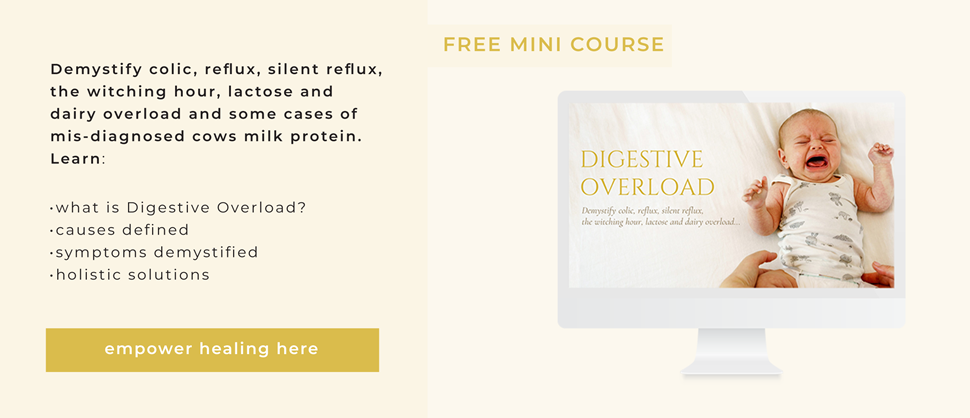
Keep reading after the Digestive Overload Mini Course that you can watch for FREE in my BabyCues Community...
How anti-reflux formulas work
Pre-thickened formulas are engineered around a clever piece of food science: making a feed that flows normally through the bottle teat but thickens once it reaches the stomach. They achieve this by exploiting the sensitivity of certain starches and gums to temperature and acidity.
Rice starch is one of the ingredients used in these formulas, and the other is locust bean / carob bean gum. The first of these commonly causes constipation as the granules swell and increase viscosity from the warmth of the stomach, unlike the bean variety that thickens in response to the acidity, with these usually causing loose stools and more gas – a few reasons why newborns unsettled symptoms tend to not ease on these products.
In both cases, the thickened mass that forms in the stomach is heavier and more cohesive than standard liquid formula. The physical principle is simple: a denser, more viscous bolus is harder for the stomach to push back up through the sphincter – aka, the feed is designed to stay down.
Additionally, manufacturers typically adjust the protein balance in these formulas by increasing casein levels because casein curds form a firmer clot in the stomach, further contributing to the "staying put" effect, but given we are not able to break down casein and whey (dairy products) for the first two to three years of life this further contributes to digestive stress and symptoms.
Five effects of milk thickeners in the digestive system
One
A thickened feed takes longer to move through the stomach into the small intestine. This has two competing effects: the baby may feel fuller for longer (not necessarily helpful), it also means stomach contents sit in the stomach for an extended period thus keeping the stomach pressured with milk, thus keeping the reflux risk window open longer.
Two
The bolus that rice/corn starch creates, physically traps air bubbles within the feed which increases pressure inside the stomach, potentially pushing the oesophageal sphincter open. Thus driving the very thing you are trying to avoid in the first place. Additionally, when that air does eventually come up it will do so forcefully, creating a delayed spit-up episode and this lends itself to the marketed narrative that your baby has reflux still and may need acid inhibitors - often the suggested next step after these formulas.
Locust Bean or carob bean gum on the other hand effects the lower digestive tract by fermenting and producing gas as a by-product. This is why bloating, wind and general gassiness are commonly reported with carob-based thickeners.
Both of these situations happening in the digestive tract can cause hugely significant amounts of pain and discomfort for our newborns. All of which could have been avoided by learning how to burp baby well, because this is one of the number causes of reflux and silent reflux.
Keep reading after the Burping and Gas Masterclass advert...

Three
Gut motility changes. As previously mentioned, rice starch being a carbohydrate it can slow the whole digestive tract resulting in constipation. Locust bean gum, by contrast, behaves as a soluble fibre in the intestines. It draws water into the gut, ferments when gut bacteria break it down, and accelerates intestinal motility, causing loose stools and gas. These loose stools can also cause weight gain issues as baby has less time to absorb nutrients.
Four
There is also emerging concern about the effect on a newborns microbiome. Introducing non-standard carbohydrates, starches and gums, to their developing gut during their critical early months of microbial colonisation may alter which bacteria establish themselves and in what proportions. The long-term significance of this is not yet fully understood, but it is an active area of research that should give us all further pause and questioning as to why we are using these at all for our infants.? Especially because, again, we can heal reflux naturally.
Five
A further concern is that thickened feeds can actually increase the energy density and osmolality of the feed, which some research suggests may paradoxically increase the frequency of lower oesophageal sphincter relaxation — one of the things that drives reflux in the first place, from the real causes of overloading the stomach.
Keep reading after the Reviews...

What the research actually shows
Here is where the story becomes uncomfortable for the anti-reflux formula industry.
"Feed thickeners are commonly used for managing infants with GOR despite the lack of strong supporting evidence." — BMJ / PMC, 2018
A 2009 meta-analysis in the Journal of Pediatrics, reviewing 14 randomised controlled trials, found that thickened formula "had no effect on the reflux index, number of acid gastroesophageal reflux episodes per hour, or number of reflux episodes lasting more than 5 minutes." Visible regurgitation decreased, but the objective measure of acid exposure (the reflux index recorded by pH monitoring) was unchanged.
A 2024 crossover cohort study published in the Journal of Parenteral and Enteral Nutrition (Njeh et al., Nationwide Children's Hospital) measured 40 infants on both routine and rice-thickened formula using 24-hour pH-impedance monitoring. The conclusion was direct: thickened formula "has no effect on acid reflux events' characteristics or overall symptom frequency."
A Cochrane review of 8 randomised trials covering 637 infants confirmed that while thickeners reduced visible regurgitation frequency by roughly two episodes per day, improvement in the reflux index was modest and evidence was of mixed quality — with the authors noting that three studies were industry-funded, introducing risk of bias.
So what are the solutions?
Well firstly we need to come at this in a different way - from the perspective and truth that nature births our newborns with a digestive system that works perfectly from birth, and it's up to us to learn how to nurture alongside their basic digestive capacities and capabilities.
Currently, this is not happening. In brief, what is occurring are feeding practices that overload the digestive tract and increase air and nutrient intake that is not natural for our baby's developing system. Also, parents are largely taught that burping may not be needed, or a few burps are enough, or the breastfeeding diet doesn't matter, or that cluster feeding is natural, but this information contributes greatly to reflux and silent reflux. As do tongue and lip ties. However, despite this misinformation that is now heavily cemented in our postnatal society, I know from years of doing this that, for the sake of our newborns health, we need to take a sledgehammer to this cemented rhetoric.
A note on when to seek medical advice
This article focuses on uncomplicated GOR in healthy, full-term infants. If your baby is not gaining weight adequately, has blood in vomit, arches their back persistently in pain, has respiratory symptoms like chronic cough or wheeze alongside reflux, or was born prematurely, these are signs that may require proper medical evaluation. True GORD, something that will show significant weight loss and throwing up of almost every feed because you baby has truly been born with a compromised sphincter muscle (which is rare) is a distinct clinical condition, and its management should be guided by a paediatrician.
Njeh M et al. (2024). Comparison of direct effects of rice-thickened formula vs routine feeds on symptoms and GER indices. J Parenteral Enteral Nutr. 48(1):64–73.
Tighe M et al. (2018). Feed thickener for infants up to six months with gastro-oesophageal reflux. Cochrane Database Syst Rev. PMC6485971.
Horvath A et al. (2008). Thickened formula is only moderately effective in the treatment of GER in healthy infants. J Pediatrics.
Wenzl T et al. (2003). Effects of thickened feeding on GER using intraluminal impedance. Pediatrics. PubMed 12671151.
Canadian Paediatric Society (2022). Medical management of gastro-esophageal reflux in healthy infants. cps.ca
American Academy of Family Physicians (2015). Diagnosis and treatment of GER in infants and children. Am Fam Physician. 92(8):705–714.